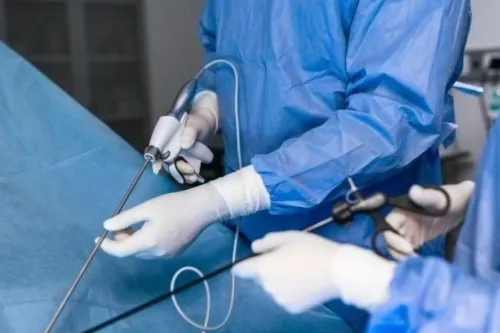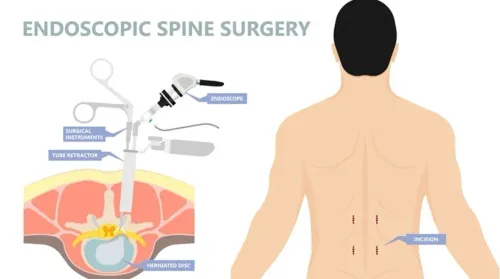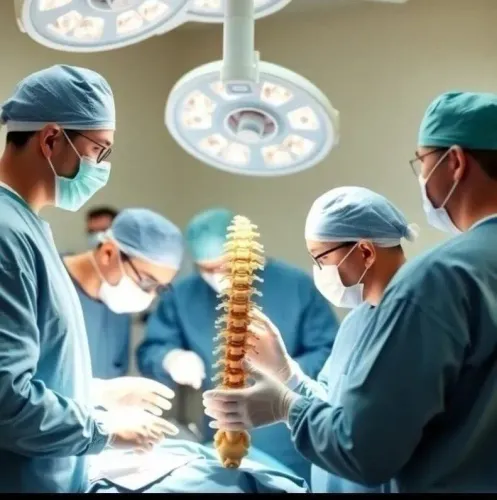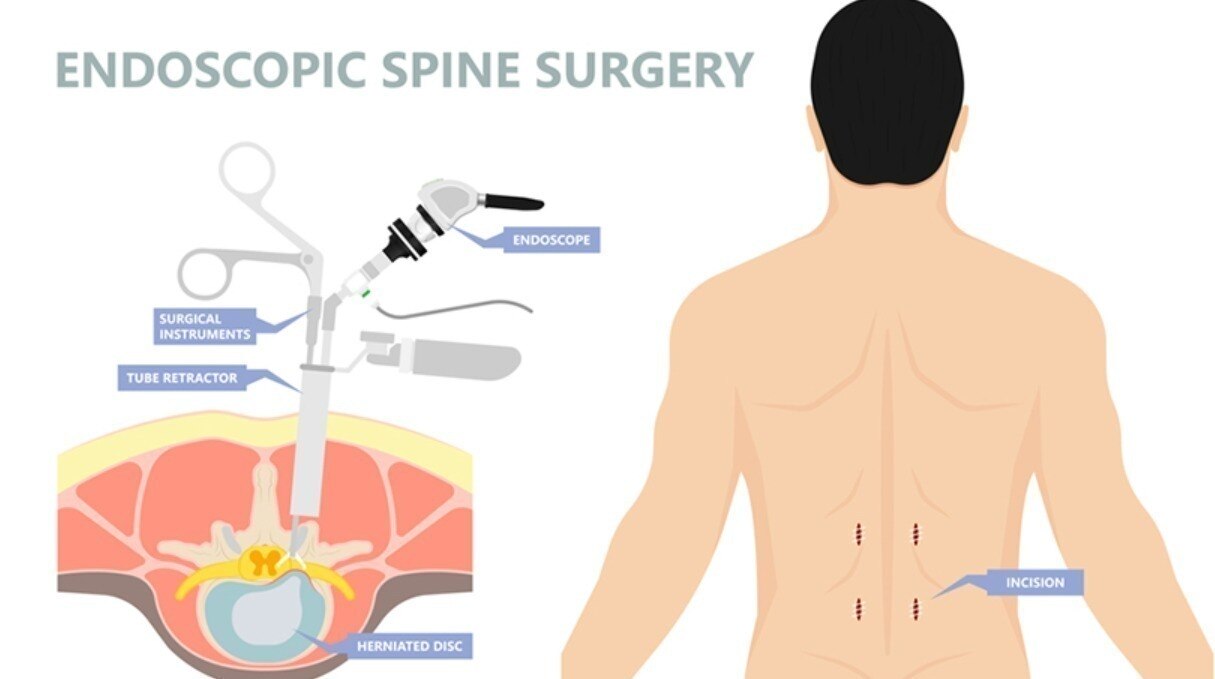
A straightforward, single-level endoscopic lumbar procedure often takes 45 to 120 minutes of surgical time, but the hospital visit lasts much longer. By the end, you will know which clock your surgeon is quoting, what can extend the operation, and when same-day discharge is realistic.
Key takeaways
- A single-level lumbar procedure often takes 45 to 120 minutes.
- Your hospital visit includes admission, anaesthesia, recovery and discharge checks.
- Diagnosis, spinal level and surgical approach determine the operation time.
- Ask when you can walk, eat, leave and return for follow-up.
The operation usually takes 45 to 120 minutes, but your hospital visit takes longer
A straightforward single-level lumbar endoscopic discectomy or decompression commonly takes 45 to 120 minutes of skin-to-skin operating time. There is no fixed Nashik duration: the estimate depends on your diagnosis, spinal level and planned approach.
| Measure | What it includes | What it does not mean |
|---|---|---|
| Skin-to-skin operating time | The surgeon’s procedure from incision to dressing | Your total time in the hospital |
| Time inside the operating room | Anaesthesia induction, positioning, sterile preparation, surgery and emergence | Time spent registering or recovering after transfer |
| Arrival-to-discharge time | Registration, consent, blood tests or imaging review, changing, preparation, recovery-room observation, walking assessment and discharge instructions | The length of the operation itself |
Ask, “Does your estimate mean skin-to-skin operating time, time inside the operating room, or arrival-to-discharge time?” These are different measurements. Anaesthesia induction, positioning and sterile preparation happen before the surgeon operates, while emergence from anaesthesia and recovery-room monitoring happen afterward.
A one-hour operation does not mean leaving one hour after incision. Drowsiness, vomiting, dizziness, uncontrolled pain, difficulty passing urine or a new weakness can delay discharge. A surgeon should therefore give you a range for your endoscopic spine surgery duration, not promise an exact Nashik time.
Why one endoscopic operation takes longer than another
A simple, single-level lumbar discectomy can take 45–120 minutes, while severe stenosis or previous surgery can make the endoscopic spine surgery operation time substantially longer. The spinal level matters: cervical, thoracic and lumbar access routes have different positioning, bone removal and nerve-safety demands.
The approach also changes the duration. Transforaminal access approaches the disc from the side; interlaminar access uses the space between the laminae. One-sided treatment is usually shorter than bilateral decompression, and one level is shorter than two or more levels.
A soft disc herniation is usually quicker than spinal stenosis, especially when bone and ligament must be removed. Calcified or recurrent disc disease, scar tissue from previous surgery, difficult anatomy and bleeding add technical steps.
| Procedure or situation | Effect on time | Important distinction |
|---|---|---|
| Endoscopic discectomy | Often shorter | Removes a focal disc fragment |
| Endoscopic decompression | Often longer | Creates space for a compressed nerve |
| Endoscopic fusion | Usually longest | Adds implants, instrumentation and more observation |
| Conventional open surgery | Larger exposure, not automatically longer | Incision size does not guarantee a shorter session or better result |
If visualization is poor, bleeding cannot be controlled, the anatomy is unsafe or adequate decompression is impossible, the surgeon may enlarge the access route or change to tubular minimally invasive or open surgery. That decision can extend the operation and hospital stay. Consent should include this possibility.
What happens from admission to recovery on the day of surgery
A typical endoscopic spine surgery day of surgery lasts longer than the operation itself. Your hospital timeline runs from admission through recovery, walking assessment and discharge planning.
1. You arrive, register, change into a gown and complete consent. The surgeon reviews your MRI or CT images, confirms the spinal level and planned approach, while the medical team checks your medicines, allergies, vital signs and test results.
2. A nurse inserts an intravenous line and prepares you for theatre. The surgeon and anaesthetist choose local, regional or general anaesthesia for your procedure and health. General anaesthesia can require airway management. The choice affects monitoring, alertness, walking assessment and discharge planning.
3. Anaesthesia time is not surgical time. Induction, airway management, positioning and emergence add time before and after the surgeon operates. Many lumbar procedures require you to lie face-down, followed by sterile skin preparation, draping and the operation itself.
4. After decompression or discectomy, the surgeon places a dressing and transfers you to recovery. Staff monitor vital signs, leg strength and sensation, then treat pain or nausea. Do not stand alone: staff assist your first mobilisation.
5. Before discharge, you receive wound-care, medication, activity and warning instructions, including whom to contact. Same-day discharge requires stable observations, controlled symptoms, safe walking and suitable alertness; drinking and urinating are checked when appropriate. An adult escort is usually required after anaesthesia.
When same-day discharge is safe—and when overnight observation is sensible
Many single-level lumbar endoscopic procedures are planned for same-day discharge. If you searched for endoscopic spine surgery for take in Nashik, the practical answer is that leaving depends on recovery, not the clock.
Before discharge, the team should confirm:
- Stable blood pressure, pulse, breathing and oxygen levels.
- Pain and nausea controlled with treatment you can continue at home.
- Adequate alertness after anaesthesia.
- Safe walking, with assistance if needed.
- Ability to drink and urinate when appropriate.
- No concerning new weakness or worsening leg symptoms.
- An adult escort to take you home and stay available after anaesthesia.
Overnight observation is sensible with significant medical conditions, a late finishing time, dizziness, vomiting, uncontrolled pain, urinary retention or limited mobility. A dural tear or concern about neurological symptoms also changes the plan. The team may keep you until morning even after an uncomplicated operation; overnight admission does not by itself mean surgery failed.
Before leaving, ask exactly whom to contact. Seek urgent medical advice for worsening weakness, loss of bladder or bowel control, fever, or sharply worsening pain. Do not wait for a routine follow-up appointment if these occur.
The questions that produce a useful time estimate in Nashik
Before booking, get the estimate in writing against your actual procedure, not a generic “endoscopic surgery” figure. Ask these questions:
- What is the exact procedure name: endoscopic discectomy, decompression, or another operation?
- Which spinal level will you treat, and how many levels are planned?
- Is treatment one-sided or two-sided?
- What is the expected skin-to-skin operating time?
- What is the expected total hospital time, from arrival through discharge?
- What anaesthesia plan is proposed, and how will it affect recovery and monitoring?
- Is same-day discharge intended?
- What is the chance of overnight observation?
- Under what circumstances would you convert to tubular minimally invasive or open surgery?
- Who should I contact after discharge for new weakness, loss of bladder or bowel control, fever, or sharply worsening pain?
A short operating time is not evidence that surgery is safer or better. The important questions are whether the diagnosis is correct, the affected nerve or spinal cord will be adequately decompressed, neurological injury is avoided, and discharge is safe for your condition.
In Nashik, Dr Chandratej Kadam's Brain & Spine Centre can review your imaging, diagnosis, proposed approach, and anaesthetic plan so you can ask for a procedure-specific estimate. Only the treating surgeon and anaesthesia team can give your individual time range.
Related service
Necl Cervical Lumbar Spondylosis Surgery Surgery. If conservative treatment fails or if neurological symptoms — such as weakness in your arms or legs — worsen, you might need surgery to... View service → |
Frequently asked questions
How long does endoscopic spine surgery take in Nashik?
A straightforward single-level lumbar endoscopic discectomy or decompression commonly takes 45 to 120 minutes of skin-to-skin operating time. Your total hospital visit takes longer because it includes admission, anaesthesia, recovery and discharge checks.
Why does one endoscopic spine operation take longer than another?
Duration depends on your diagnosis, the spinal level and the planned surgical approach. A single-level procedure has a different time estimate from surgery involving more than one level or a more complex problem.
What happens on the day of endoscopic spine surgery?
You complete admission, preparation and anaesthesia before surgery. After the operation, staff monitor you in recovery, assess movement and symptoms, and decide when you can eat, walk and leave safely.
When is same-day discharge safe after endoscopic spine surgery?
Same-day discharge is considered after recovery checks show that you are stable, alert, mobile enough for discharge and free from problems requiring observation. Overnight monitoring is sensible when recovery is slower or your surgeon identifies a reason to watch you longer.
What should I ask for a useful endoscopic spine surgery time estimate?
Ask whether the estimate covers skin-to-skin operating time or the full hospital visit. Confirm the diagnosis, spinal level, planned approach, expected admission and discharge times, and the conditions for same-day discharge.