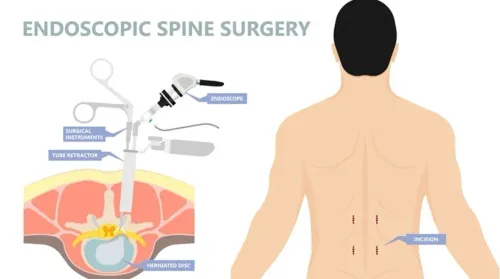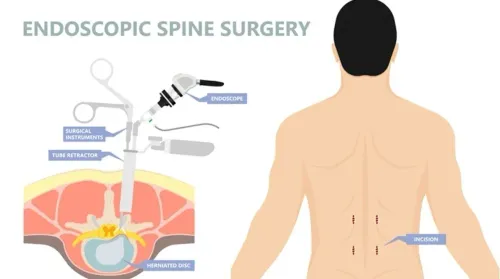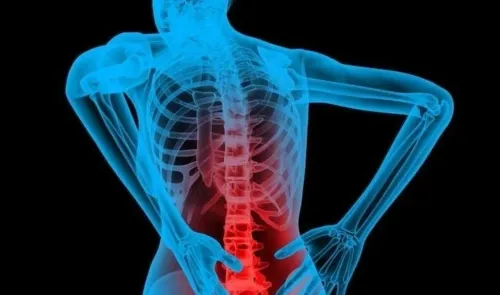
A small access incision does not remove the risks of nerve manipulation, anaesthesia, positioning, infection, radiation exposure, or the spinal disorder itself. Before consenting, you should be able to identify the exact level and approach, recognise symptoms that need urgent care, compare realistic alternatives, and confirm what happens if the planned operation cannot be completed safely.
Key takeaways
- Report new weakness, bladder changes, fever, or worsening pain urgently.
- Lumbar, cervical, and thoracic approaches carry different nerve and spinal cord risks.
- Match endoscopic surgery to your diagnosis, imaging, and symptom pattern.
- Verify surgeon experience, equipment, emergency backup, and follow-up arrangements in Nashik.
Which complications and side effects should you expect or report urgently?
Endoscopic spine surgery side effects can include temporary leg pain, numbness, tingling or dysesthesia. After lumbar transforaminal surgery, instruments pass close to the exiting nerve root and dorsal-root-ganglion region, so irritation can occur.
Endoscopic spine surgery complications include infection, bleeding, epidural haematoma, dural tear, cerebrospinal-fluid leakage, nerve-root injury, incomplete decompression, worsening pain and incomplete symptom relief.
| Symptom or finding | What it may indicate | What to do |
|---|---|---|
| Temporary leg pain, tingling or altered sensation | Postoperative nerve irritation | Follow the discharge plan and report symptoms that persist or worsen |
| New or worsening weakness, saddle numbness, or loss of bladder or bowel control | Nerve compression or epidural haematoma | Seek emergency medical assessment immediately |
| Rapidly worsening pain, fever, increasing redness, pus or clear wound drainage | Bleeding, infection or cerebrospinal-fluid leakage | Contact the surgical team urgently; use emergency care for severe deterioration |
| Severe or positional headache after a suspected dural tear | Ongoing cerebrospinal-fluid leak | Contact the surgical team urgently |
Residual or recurrent disc herniation is a recognised late problem after lumbar discectomy. Published studies use different techniques and definitions, with commonly cited recurrence rates of about 3%–12%, not one universal rate. Persistent symptoms can reflect irreversible nerve damage or continuing disc degeneration, and another operation may involve repeat decompression or a different procedure.
Ask what would trigger each option.
How do lumbar, cervical and thoracic approaches change the risk?
The spinal level, route and target lesion determine risk more than the label endoscopic spine surgery. A lumbar transforaminal cannula passes near the exiting nerve root and dorsal-root-ganglion region, so temporary leg pain, numbness or dysesthesia can occur. Lumbar interlaminar access follows a different corridor and carries different limits.
A migrated disc fragment, scar tissue from earlier surgery, unusual anatomy, bleeding or poor visibility can prevent complete access. Ask what happens if the fragment cannot be reached or removed.
Cervical procedures require separate discussion of spinal-cord injury, nerve-root injury and vertebral-artery injury. Thoracic procedures can threaten the spinal cord and, depending on the route, the pleura or lung, causing pneumothorax.
For endoscopic spine surgery risks before treatment, ask these questions:
- If bleeding obscures the view, the anatomy is unusual, the fragment is inaccessible or an injury needs repair, will the surgeon convert immediately to a tubular minimally invasive or open operation?
- How many fluoroscopic X-rays are expected, what radiation-protection measures will be used, and what is the surgeon’s actual fluoroscopy time for this procedure?
- Which risks come from anaesthesia, positioning, infection and nerve manipulation, regardless of incision size?
- How could the underlying disease still cause symptoms after technically successful decompression?
A small incision does not remove these hazards. Conversion is a safety contingency, not proof that treatment failed.
How is it decided whether endoscopic surgery fits your diagnosis?
Endoscopic surgery fits when the MRI or CT abnormality matches the painful side, spinal level, symptom pattern and neurological examination. An abnormal scan alone does not prove that surgery will help.
The assessment should record symptom duration, weakness, altered reflexes or sensation, spinal instability, deformity, severe canal narrowing, tumour, infection, fracture and previous operations. These findings determine whether endoscopy addresses the actual problem or risks incomplete treatment.
Outcomes are more predictable when a treatable nerve-root compression causes dominant leg pain. Results are less predictable when symptoms come mainly from axial back pain, facet disease, severe degeneration or irreversible nerve injury.
Use this endoscopic spine surgery risks before treatment checklist:
- Ask what scan finding explains your symptoms and examination.
- Ask what finding rules endoscopy out.
- Ask whether treatment is urgent if weakness or other neurological function is deteriorating.
| Finding | Usual implication | Why it matters |
|---|---|---|
| Dominant leg pain with matching nerve-root compression | Endoscopy may fit | Decompression targets a defined source |
| Mainly axial back pain, facet disease or severe degeneration | Benefit is less predictable | Disc removal may not treat the pain generator |
| Progressive deficit, severe weakness, saddle numbness, or bladder or bowel dysfunction | Urgent assessment and decompression | Delaying treatment can threaten neurological function |
| Multilevel compression, instability or deformity | Another operation, stabilisation or fusion may fit better | Endoscopy alone may not restore structural support |
| Tumour, infection or fracture | Condition-specific treatment | Decompression alone does not treat the underlying disease |
The endoscopic spine surgery complications discussion should include whether persistent symptoms would lead to observation, medication and rehabilitation, repeat decompression or fusion. Ask how quickly you must act if neurological function worsens.
What should you compare and record before signing consent?
Before signing, compare the proposed operation with medication and physiotherapy, injections, conventional microdiscectomy, tubular minimally invasive surgery, and open decompression with fusion. Ask about exposure, recovery demands, complication patterns, realistic benefit, and the likelihood of further surgery. “Minimally invasive” does not guarantee less pain, faster recovery, or lower risk.
| Option | Compare and record |
|---|---|
| Medication and physiotherapy | Expected benefit, duration, limitations, and risks of delaying surgery |
| Injections | Target, temporary benefit, infection or nerve risks, and next step if symptoms return |
| Endoscopic surgery | Exact approach and level, likely benefit, endoscopic spine surgery side effects, and conversion plan |
| Conventional microdiscectomy | Muscle exposure, recovery, complications, and reoperation rate |
| Tubular minimally invasive surgery | Exposure, visibility, conversion risk, and recovery demands |
| Open decompression with fusion | Need for stabilisation, implant risks, recovery, and adjacent-level problems |
Request the surgeon’s complication and reoperation rates for your exact technique and spinal level, including migrated fragments and revision cases. Ask what happens if bleeding, unusual anatomy, scar tissue, or an unreachable fragment makes the endoscopic view inadequate.
Your consent document should name:
- Target level, intended goal, alternatives, material risks, expected benefits, and chance of no improvement
- Circumstances that trigger conversion to tubular or open surgery
- Anticoagulant or antiplatelet medicines, diabetes, smoking, allergies, and prior surgery
- Infection-prevention measures, anaesthesia provider, and postoperative monitoring
- Costs and practical demands for imaging, blood tests, medication changes, transport, wound care, activity limits, physiotherapy, follow-up, and repeat imaging
How can you verify local capability before treatment in Nashik?
Searches for endoscopic spine surgery risks in Nashik cannot produce a sound city-wide complication rate. Verify the individual surgeon, the proposed facility and the exact operation instead.
| Check | Ask for | Why it matters |
|---|---|---|
| Registration | The surgeon’s entry in the National Medical Commission’s Indian Medical Register | Confirms registration before you discuss treatment |
| Experience | Training and case volume for the exact approach, spinal level and revision situation | A lumbar primary case does not prove experience with cervical, thoracic or revision surgery |
| Facility | Accreditation, infection-control procedures, MRI or CT access, anaesthesia capability and emergency backup | Shows whether diagnosis, monitoring and urgent treatment are available on site |
| Aftercare | Written consent, postoperative monitoring, emergency transfer arrangements and a named contact after discharge | Prevents uncertainty if symptoms worsen at home |
Ask whether the facility can manage a dural tear, haematoma, neurological deterioration or pneumothorax. Ask whether a tubular or open conversion can happen immediately if a fragment is unreachable, bleeding blocks the view or an injury needs repair.
At Dr Chandratej Kadam's Brain & Spine Centre, a Nashik patient can raise these questions during specialist assessment and request answers tied to the proposed technique. Compare those answers with technique-specific outcomes and follow-up arrangements. Do not treat “minimally invasive” as proof of lower risk.
The consent form should name the target level, alternatives, conversion plan and emergency contact.
Related service
Spine (ESS) is an ultra minimally invasive surgical procedure that effectively relieves chronic low back and leg pain. View service → |
Frequently asked questions
Which endoscopic spine surgery side effects should you report urgently?
Report new or worsening weakness, loss of bladder or bowel control, numbness spreading rapidly, fever, wound drainage, severe headache, breathing difficulty, or pain that escalates instead of improving.
How do lumbar, cervical, and thoracic endoscopic approaches change risk?
Lumbar procedures place instruments near exiting nerve roots and the dorsal-root-ganglion region. Cervical procedures involve narrower spaces and structures near the spinal cord, while thoracic procedures require careful planning around the spinal cord and chest-related anatomy.
How is it decided whether endoscopic spine surgery fits your diagnosis?
The decision combines your symptoms, neurological examination, MRI or CT findings, the exact pain generator, spinal stability, previous treatment, and whether the target can be reached safely through an endoscopic approach.
What should you compare and record before signing consent?
Record the diagnosis, proposed level and approach, expected benefit, alternatives, endoscopic spine surgery complications, anaesthesia plan, conversion plan, recovery restrictions, follow-up schedule, and warning signs.
How can you verify local capability before treatment in Nashik?
Ask who will perform the procedure, how often they perform the specific approach, which endoscopic system and imaging are available, who provides anaesthesia, what emergency backup exists, and where you will receive follow-up care.