New weakness, spreading numbness, bladder or bowel changes, severe worsening pain, and wound or breathing symptoms need the right level of care—not simply more rest or pain medicine. You will learn which signs require an emergency department, which need rapid specialist review, how to prepare for a consultation, and when endoscopic treatment may not be the safest pathway.
Key takeaways
- Seek emergency care for bladder, bowel, saddle numbness, or rapidly worsening leg weakness.
- Expect gradual pain changes after surgery, but report fever, wound drainage, or new weakness promptly.
- Nerve compression pain often travels from the back into the buttock, thigh, calf, or foot.
- Compare diagnosis, surgeon experience, alternatives, risks, and follow-up before choosing endoscopic surgery.
Which spine symptoms require emergency assessment now?
Loss of bladder or bowel control, inability to pass urine, saddle numbness, or rapidly worsening weakness in either leg requires immediate assessment at the nearest emergency department. Do not book a routine consultation. This pattern can indicate time-sensitive cauda equina compression.
Go to emergency care immediately for:
- New foot drop, inability to lift the ankle or toes, repeated falls, or rapidly progressive weakness in an arm or leg.
- Sudden severe back or leg pain after surgery with new numbness, weakness, or bladder symptoms; this can indicate an epidural haematoma or another compressive complication.
- Chest pain, sudden breathlessness, coughing blood, fainting, or a rapid heartbeat, which can signal pulmonary embolism.
- New one-sided calf or thigh swelling, warmth, redness, or tenderness, which can signal deep-vein thrombosis.
| Symptom pattern | What it may mean | Action |
|---|---|---|
| Emergency neurological symptoms | Cauda equina compression or postoperative compression | Nearest emergency department now |
| Stable tingling or pain that is gradually improving | Irritated nerve recovering after surgery | Follow the discharge plan; arrange review if it stops improving |
| New or spreading numbness, weakness, or worsening pain | Deteriorating nerve function | Urgent spine specialist assessment |
Urinary difficulty alone can follow anaesthesia, opioid medicine, constipation, or immobility. Urinary retention with saddle numbness or new leg weakness is an emergency. These are not routine endoscopic spine surgery problems in Nashik to manage through a delayed clinic appointment.
Whether you are searching for endoscopic spine surgery for warning signs in Nashik or endoscopic spine surgery problems in Nashik, seek immediate hospital assessment for these red flags.
Which symptoms after surgery are expected, and which need prompt review?
Stable pain or tingling immediately after decompression can occur while an irritated nerve recovers. Judge the trend, not the incision size.
| Expected pattern | Concerning pattern |
|---|---|
| Stable or gradually improving pain or tingling | Steadily worsening pain, new weakness, or new or spreading numbness |
| Short-term urinary difficulty alone | Urinary retention with saddle numbness or new leg weakness |
| A clean, closed incision | Fever, chills, increasing wound pain, spreading redness or warmth, wound opening, pus-like drainage, or feeling systemically unwell |
Contact the operating surgeon or a qualified spine specialist promptly if symptoms worsen, return after initial improvement, or pain increases with any neurological change. Do not wait for analgesics to work. A normal-looking incision does not rule out a deeper infection.
A severe headache that worsens sitting or standing and improves when lying down can indicate a cerebrospinal-fluid leak, especially with clear wound fluid, nausea, neck stiffness, or light sensitivity. Seek specialist review. These warning patterns matter whether you are assessing spine surgery symptoms in Nashik or endoscopic spine surgery problems in Nashik.
Urinary difficulty alone can follow anaesthesia, opioid medicine, constipation, or immobility. Urinary retention combined with saddle numbness or new leg weakness is an emergency pattern and needs immediate hospital assessment.
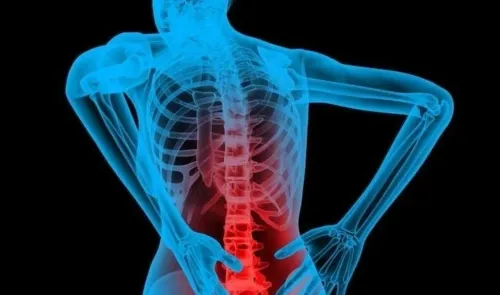
How do you know whether the pain is coming from a compressed nerve?
An MRI disc bulge alone does not establish a need for endoscopic surgery. The examination and scan must match: the side and level of radiating pain, sensory loss, reflex change, or weakness should correspond to the nerve compressed on MRI.
A compressed nerve usually causes shooting or burning pain, numbness, tingling, or weakness along a recognisable limb pattern. Muscle strain causes local, movement-related pain; hip disease may cause groin pain and restricted hip movement; peripheral neuropathy often affects both feet symmetrically.
Vascular disease can cause exertional limb pain, while fracture, tumour, infection, or inflammatory disease needs a different evaluation.
Fever, chills, unexplained weight loss, cancer history, immunosuppression, recent infection, significant trauma, or pain unrelated to movement require urgent investigation rather than routine degenerative-disc treatment. If you are assessing spine surgery symptoms in Nashik, use this checklist:
- Confirm symptom duration, progression, objective neurological deficit, and walking or hand-function changes.
- Review disc location, degree of stenosis, spinal stability, deformity, and any previous surgery.
- Tell the specialist about your general health, diabetes, blood thinners, and infection risk.
- Ask whether the compression is safely reachable through an endoscopic approach.
Endoscopic surgery may be the wrong route for instability, major deformity, extensive stenosis, some tumours or infections, significant trauma, or compression that cannot be safely reached. For guidance on when to see spine surgeon in Nashik, seek prompt review when weakness progresses, pain recurs, or function declines.
When should you book a spine specialist appointment in Nashik?
Book a spine specialist appointment when pain, numbness, weakness, walking difficulty, or arm-and-hand dysfunction persists after an appropriate period of rest, prescribed medicines, physiotherapy, or activity modification. Arrange review when symptoms return after initial improvement or stop you working, sleeping, or moving normally.
Stable symptoms without red flags can usually fit a planned appointment. Progressive weakness, new foot drop, repeated falls, or worsening function needs expedited review rather than routine monitoring. Loss of bladder or bowel control, saddle numbness, or rapidly worsening weakness requires emergency assessment.
For advice about endoscopic spine surgery for warning signs in Nashik, take:
- MRI images, not only the written report
- The MRI report
- A medication list, including blood thinners
- Previous treatment and physiotherapy records
- Operation notes, if you have had surgery
- A timeline showing exact onset, progression, triggers, and functional changes
Ask whether the diagnosis matches your examination and MRI, which technique and anaesthesia are proposed, and whether open decompression or fusion is safer. Also ask about conversion to open surgery, expected restrictions, recurrence risk, follow-up, and the symptom that should trigger an emergency return.
This preparation helps answer when to see spine surgeon in Nashik without choosing a procedure before confirming the cause.
What should you compare before choosing endoscopic surgery?
A smaller incision does not guarantee cure. Ask the surgeon to compare these options against your examination, MRI findings, nerve damage, spinal stability, and actual diagnosis.
| Option | Access, anaesthesia and tissue trade-off | Main limitations or uses |
|---|---|---|
| Continued non-surgical care | No incision or surgical anaesthesia; uses medicines, physiotherapy, and activity changes | Fits symptoms improving without progressive weakness |
| Targeted injection | Needle access under imaging, often with local anaesthesia; limited tissue disruption | May reduce inflammation, but does not permanently remove structural compression |
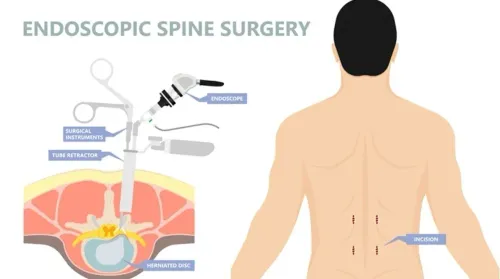
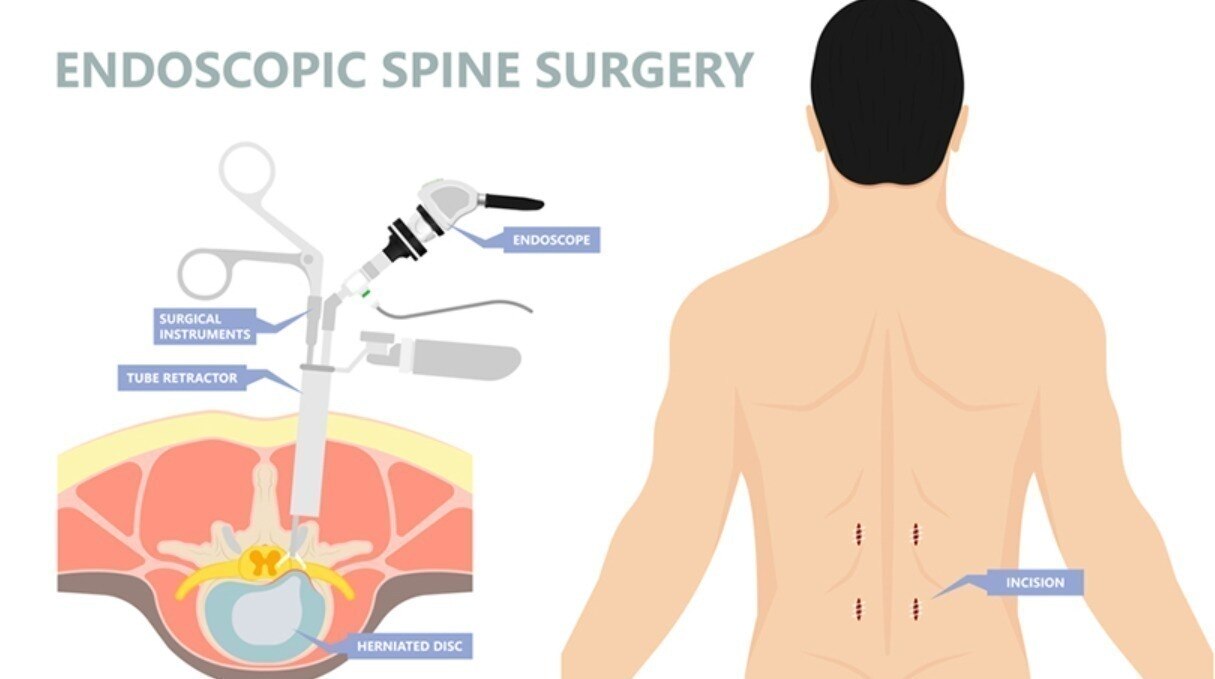
| Endoscopic decompression | Small access route, usually less muscle disruption; still carries dural tear, cerebrospinal-fluid leak, nerve injury, infection, bleeding or haematoma risk | Incomplete decompression, recurrent disc herniation, or another operation remains possible |
| Open decompression | Wider exposure and incision, with more muscle and tissue disruption | May provide safer or more complete access when endoscopy cannot reach the compression |
| Fusion | Screws, rods, and bone graft stabilise an unstable segment; greater surgical burden | Applies to instability or deformity, not every disc problem |
Recovery depends on nerve injury, stability, general health, and the selected procedure, so no fixed recovery promise applies. Plan for instructed walking, wound care, lifting limits, physiotherapy, safe permitted driving, time away from work, and scheduled follow-up.
For endoscopic spine surgery for warning signs in Nashik, Dr Chandratej Kadam's Brain & Spine Centre offers one option for specialist comparison. Ask when to see spine surgeon in Nashik, but take emergency neurological, breathing, or clot symptoms to the nearest emergency department first.
Related service
Spine (ESS) is an ultra minimally invasive surgical procedure that effectively relieves chronic low back and leg pain. View service → |
Frequently asked questions
Which spine symptoms require emergency assessment now?
Go to the nearest emergency department for loss of bladder or bowel control, inability to pass urine, saddle numbness, or rapidly worsening weakness in either leg. These symptoms can indicate time-sensitive cauda equina compression.
Which symptoms after spine surgery need prompt review?
Contact your surgical team promptly for fever, increasing redness or swelling, pus or persistent wound drainage, worsening pain, new numbness, new weakness, or difficulty passing urine. Sudden bladder or bowel loss requires emergency assessment.
How do you know whether pain is coming from a compressed nerve?
Nerve compression pain often travels from the lower back into the buttock and down one leg, with tingling, numbness, burning, electric-shock sensations, or weakness. A specialist examination helps distinguish it from muscle or joint pain.
When should you book a spine specialist appointment in Nashik?
Book an appointment when back or neck pain persists, radiates into an arm or leg, causes numbness or weakness, limits walking, or returns despite treatment. Use emergency care instead for bladder, bowel, saddle, or rapidly worsening weakness symptoms.
What should you compare before choosing endoscopic spine surgery?
Compare the confirmed diagnosis, non-surgical alternatives, the exact procedure, surgeon training and experience, expected benefits, risks, anaesthesia plan, hospital facilities, total follow-up plan, and what happens if symptoms persist.